Reviews / Xuande / Revolutionary Girl Utena
ENTRY #0038 • DALNET ARCHIVE
⚡ CLASSIC SPECIFICATION ERA: 2001

Revolutionary Girl Utena

ARCHIVIST: Xuande
LOGGED: 2001-05-29
85%
Editorial Score
Consensus Grade: Consensus Aligned ⚖️
📊 Production Parameter Matrix Scale 1.0 – 10.0
S+ [STR] Story & Narrative Direction 10 / 10
D [AGI] Animation & Cel Craftsmanship 5 / 10
S [INT] Character Dynamics & Cast 9 / 10
A [SYN] Voice Acting & Soundtrack 8 / 10
Consensus: Consensus Aligned ⚖️
CLASSIFICATION A+ TIER
[+] Strengths & Highlights
I especially liked the way themes from Hesse's novels were integrated into the story while remaining fresh and original. I also liked the way Jury was portrayed. Of all the characters, she seemed the most real and human to me, despite her coldness.
[-] Vulnerabilities & Flaws
Gratuitous Anthy-slapping. The silly character of Chu-Chu seemed really incongruous in several otherwise serious scenes. Finally, only the first story arc has been released in the US. The remaining 26 episodes and the movie can only be found as fansubs or the like.
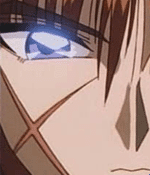
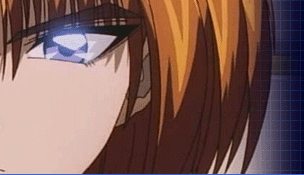
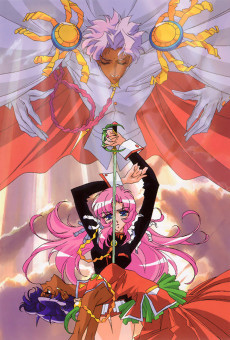
Revolutionary Girl Utena Remastered Poster Revolutionary Girl Utena 2001 Capture
⤢ Fullscreen • Hover 2001
Consensus Aligned ⚖️
Modern Consensus: Modern fandom regards Revolutionary Girl Utena with steady respect, in close harmony with the 2001 verdict.

📖 Overview

The Utena TV series is about the adventures of a young girl who dreams of becoming a prince and the mysterious happenings behind the scenes at the prestigious Ohtori Academy. It is an intriguing blend of philosophy, comedy, and shojo melodrama over 39 episodes, divided into three story arcs.

🎬 Storyline & Narrative

Once upon a time, years and years ago, there was a little princess, and she was very sad, for her mother and father had died. Before the princess appeared a travelling prince riding upon a white horse. He had a regal bearing and a kind smile. The prince wrapped the princess in a rose-scented embrace and gently wiped the tears from her eyes. "Little one," he said, "who bears up alone in such sorrow, never lose that strength or that nobility, even when you grow up. I give you this to remember this day. We will meet again. This ring will lead you to me some day." Perhaps the ring the prince gave her was an enagement ring. This was all well and good, but so impressed was she by him that the princess vowed to become a prince herself one day.But was that really such a good idea?

So begins the TV series Utena. The story is about a 14-year-old girl, Utena Tenjou, who is both searching for the prince that comforted her in her childhood and wishing to become a prince herself.

The story begins at Ohtori Academy, a private boarding institution which teaches all grades from elementary to high school. As 8th grade begins, Utena finds her past coming back to her as the ring her prince gave her (which bears a resemblance to the rose crest of the school) turns out to mark its wearer as a member of an elite secret society that duels under the guidance of The End of the World. They seek to possess the Rose Bride, Himemiya Anthy, a quiet, secretive girl in Utena's class who is said to be the key to the power to revolutionize the world. Utena soon finds herself caught up in it all and, as a victor of one of the duels, engaged to the Rose Bride.

Watching Utena is like watching two different storylines at the same time. The immediate one, the story of the various characters and their links to one another, is done in a way familiar to anyone who has seen a shojo show before, full of melodrama and bizarre relationships. The overarching story, on the other hand, deals with the reason behind the duels and the identity of Utena's prince. It develops very slowly over the first episodes, and yet is the driving force of the show. Try as one might, however, the two cannot be fully separated from one another. They are linked in such a way that the immediate story foreshadows and develops themes central to the overarching one. Utena is the sort of anime you can watch over and over, each time discovering something new.

The writings of German novelist and poet Hermann Hesse were strong influences on the story of Utena. Indeed, the speech recited by the student council as they ascend in the elevator to their chamber is taken almost verbatim from Hesse's book Demian. Hesse's existentialism also plays a big role in the paths the characters take, particularly Utena's own at the end.

The direction is superb. Nothing in Utena happens without a reason. It is surreal in the best sense of the word, in that everything is a symbol for something, no matter how strange it seems at first glance. Even the cryptic lyrics of the duel songs refer metaphorically to the characters and the story. Furthermore, as the series darkens in the later episodes, the direction rises to meet the challenge. No one can walk away from the last episodes without shed tears or a clenched stomach.

👥 Characters & Dynamics

Utena is full of characters of many different kinds. Although some of them at first seem to be stereotypes, strange things about them soon set them apart from anyone like them in other stories. With few exceptions, the characters also do not remain static. There is a series of revelations as the story progresses, sometimes by the characters themselves and sometimes by the audience, each of which changes the way you see the characters, occasionally dramatically.

More than anything, the characters are defined by their conflicts. Most of these are internal, such as Utena's often-conflicting desires to play the princess to her prince and to be a prince herself, but through clever storytelling they often find external expressions in the duels between the characters.

You will sometimes want to reach inside the screen and choke the life out of some of the characters, but you will never be bored with them.

🎨 Animation & Visual Direction

Utena is a fairly low-budget television series, and it shows. The art is stock shojo, with big eyes, long legs and gravity-defying hair, and most of the animation won't blow you away, either. Ritual also plays an important part in Utena, which results in a lot of re-used footage. In short, don't want Utena for the animation. Watch it for the story.

🎵 Voice Acting & Soundtrack

I have only seen Utena subtitled. The first story arc has been subtitled by Central Park Media, and the quality of the translation is pretty good. The Japanese voice acting is, for the most part, very good. Everyone's voice matches their character, particularly the soft beauty of Anthy's and the deep rumbling of Akio's. Nanami, on the other hand, sounds like the stereotyped anime bad girl, all squeeks and 'o-ho-ho-ho' laughs. In the style of fellow small, furry things Mokona and Pikachu, Chu-Chu's vocabulary comprises solely his own name.

The background music is very good, usually matching the mood of the scene perfectly and managing to sound good on its own, while at the same time not taking your attention away from what is happening.

The music during the duels is very unusual, a sort of avant-garde metal with seemingly nonsensical choral lyrics. For the first story arc, it has a very accoustic sound, but as the series progresses the instruments are replaced with heavy-sounding synthesizers.

Finally, the opening theme is one of the most memorable in anime. Sung by Masami Okui of Slayers fame, it is the sort of song to which you will soon find yourself singing along, even if you have no clue what the Japanese lyrics mean.

🔴 What We Disliked: Gratuitous Anthy-slapping. The silly character of Chu-Chu seemed really incongruous in several otherwise serious scenes. Finally, only the first story arc has been released in the US. The remaining 26 episodes and the movie can only be found as fansubs or the like.
💬 Early-2000s Fandom Pulse Community Rating: ★ 5/5 (3 historical responses)
• Community Praise: Very well written review. Intriguing, like the series itself. I have to admit that I have only watched a few episodes of Utena (the first few and then some later one). To tell the truth, I don't really understand much of what is happening which is always a source of irritation to me. ;) The events are mysterious, the songs are darkly poetic, the names (overly?) dramatic and the shadow plays suggestive. Lots of places just had me raising my eyebrows and going "huh?" though. The review gave me the desire to find out what actually happens and what the whole story behind the rose crest though. Good job. ;) • I really loved this review,it showed the up hill sides of the anime & the down but not inflicking the anime so basicly your saying it sucks,because it doesn't,i've read many reviews for Utena in perticular lots giveing it a score of 4 out of 10 which really pissed me off i must admit Utena the series is rather stange at times but all in all i LOVED it!! ^_^ F/ the princess herself *~Garnet~*
• Contentious Points: Gratuitous Anthy-slapping. The silly character of Chu-Chu seemed really incongruous in several otherwise serious scenes. Finally, only the first story arc has been released in the US. The remaining 26 episodes and the movie can only be found as fansubs or the like.
← Kyuuketsuki Miyu (TV) (80%) Card Captor Sakura (85%) →
DALnet #anime DALnet #anime DALnet #anime [ animereviews.org ]
Reviews
Editorials
Quotes
People
Home
Animereviews Archive
Revolutionary Girl Utena Logo
Added by Xuande on 2001-05-29
Last modified: 2001-05-29 | Score: 85%
Story Animation Characters Voices Overall Score
10 / 10 5 / 10 9 / 10 8 / 10 85%
Modern Retrospective Consensus (2026)

Verdict: Consensus Aligned ⚖️
Consensus Note: Modern fandom regards Revolutionary Girl Utena with steady respect, in close harmony with the 2001 verdict.

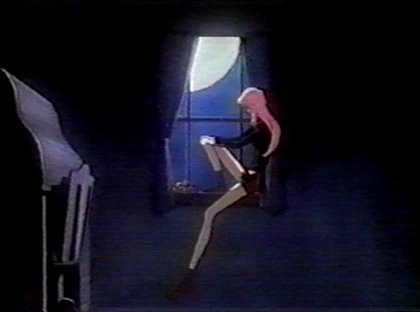
Screenshot 1 Screenshot 2
Overview

The Utena TV series is about the adventures of a young girl who dreams of becoming a prince and the mysterious happenings behind the scenes at the prestigious Ohtori Academy. It is an intriguing blend of philosophy, comedy, and shojo melodrama over 39 episodes, divided into three story arcs.

Storyline

Once upon a time, years and years ago, there was a little princess, and she was very sad, for her mother and father had died. Before the princess appeared a travelling prince riding upon a white horse. He had a regal bearing and a kind smile. The prince wrapped the princess in a rose-scented embrace and gently wiped the tears from her eyes. "Little one," he said, "who bears up alone in such sorrow, never lose that strength or that nobility, even when you grow up. I give you this to remember this day. We will meet again. This ring will lead you to me some day." Perhaps the ring the prince gave her was an enagement ring. This was all well and good, but so impressed was she by him that the princess vowed to become a prince herself one day.But was that really such a good idea?

So begins the TV series Utena. The story is about a 14-year-old girl, Utena Tenjou, who is both searching for the prince that comforted her in her childhood and wishing to become a prince herself.

The story begins at Ohtori Academy, a private boarding institution which teaches all grades from elementary to high school. As 8th grade begins, Utena finds her past coming back to her as the ring her prince gave her (which bears a resemblance to the rose crest of the school) turns out to mark its wearer as a member of an elite secret society that duels under the guidance of The End of the World. They seek to possess the Rose Bride, Himemiya Anthy, a quiet, secretive girl in Utena's class who is said to be the key to the power to revolutionize the world. Utena soon finds herself caught up in it all and, as a victor of one of the duels, engaged to the Rose Bride.

Watching Utena is like watching two different storylines at the same time. The immediate one, the story of the various characters and their links to one another, is done in a way familiar to anyone who has seen a shojo show before, full of melodrama and bizarre relationships. The overarching story, on the other hand, deals with the reason behind the duels and the identity of Utena's prince. It develops very slowly over the first episodes, and yet is the driving force of the show. Try as one might, however, the two cannot be fully separated from one another. They are linked in such a way that the immediate story foreshadows and develops themes central to the overarching one. Utena is the sort of anime you can watch over and over, each time discovering something new.

The writings of German novelist and poet Hermann Hesse were strong influences on the story of Utena. Indeed, the speech recited by the student council as they ascend in the elevator to their chamber is taken almost verbatim from Hesse's book Demian. Hesse's existentialism also plays a big role in the paths the characters take, particularly Utena's own at the end.

The direction is superb. Nothing in Utena happens without a reason. It is surreal in the best sense of the word, in that everything is a symbol for something, no matter how strange it seems at first glance. Even the cryptic lyrics of the duel songs refer metaphorically to the characters and the story. Furthermore, as the series darkens in the later episodes, the direction rises to meet the challenge. No one can walk away from the last episodes without shed tears or a clenched stomach.

Characters

Utena is full of characters of many different kinds. Although some of them at first seem to be stereotypes, strange things about them soon set them apart from anyone like them in other stories. With few exceptions, the characters also do not remain static. There is a series of revelations as the story progresses, sometimes by the characters themselves and sometimes by the audience, each of which changes the way you see the characters, occasionally dramatically.

More than anything, the characters are defined by their conflicts. Most of these are internal, such as Utena's often-conflicting desires to play the princess to her prince and to be a prince herself, but through clever storytelling they often find external expressions in the duels between the characters.

You will sometimes want to reach inside the screen and choke the life out of some of the characters, but you will never be bored with them.

Animation

Utena is a fairly low-budget television series, and it shows. The art is stock shojo, with big eyes, long legs and gravity-defying hair, and most of the animation won't blow you away, either. Ritual also plays an important part in Utena, which results in a lot of re-used footage. In short, don't want Utena for the animation. Watch it for the story.

Voice & Audio

I have only seen Utena subtitled. The first story arc has been subtitled by Central Park Media, and the quality of the translation is pretty good. The Japanese voice acting is, for the most part, very good. Everyone's voice matches their character, particularly the soft beauty of Anthy's and the deep rumbling of Akio's. Nanami, on the other hand, sounds like the stereotyped anime bad girl, all squeeks and 'o-ho-ho-ho' laughs. In the style of fellow small, furry things Mokona and Pikachu, Chu-Chu's vocabulary comprises solely his own name.

The background music is very good, usually matching the mood of the scene perfectly and managing to sound good on its own, while at the same time not taking your attention away from what is happening.

The music during the duels is very unusual, a sort of avant-garde metal with seemingly nonsensical choral lyrics. For the first story arc, it has a very accoustic sound, but as the series progresses the instruments are replaced with heavy-sounding synthesizers.

Finally, the opening theme is one of the most memorable in anime. Sung by Masami Okui of Slayers fame, it is the sort of song to which you will soon find yourself singing along, even if you have no clue what the Japanese lyrics mean.

Likes: I especially liked the way themes from Hesse's novels were integrated into the story while remaining fresh and original. I also liked the way Jury was portrayed. Of all the characters, she seemed the most real and human to me, despite her coldness.

Dislikes: Gratuitous Anthy-slapping. The silly character of Chu-Chu seemed really incongruous in several otherwise serious scenes. Finally, only the first story arc has been released in the US. The remaining 26 episodes and the movie can only be found as fansubs or the like.